11-05-2016 20:37
 Zuzana Sochorová (Egertová)
Hi,this very little ascomycete grew on soil in a m
08-05-2026 11:55
Gernot FriebesHi,found on a decorticated Picea abies branch stil

05-05-2026 22:40
Gernot FriebesHi,I believe this is a Plagiostoma growing on a Sa
06-05-2026 11:25
 Castillo Joseba
Me mandan el material seco de Galicia (España) re
06-05-2026 17:23
Thomas Læssøehttps://svampe.databasen.org/observations/10594257
28-04-2026 20:07
 Lothar Krieglsteiner
... on twig in the air at standing Ceratonia siliq
04-05-2026 18:13
 Stephen Martin Mifsud
ID request for what seems to be a true aquatic fun
04-05-2026 16:39
Stephen Martin Mifsud
ID request: This specimen was collected in Malta o
28-07-2011 18:31
 Alex Akulov
Dear FriendsToday I made the pdf file of Velenovsk
 Hi again
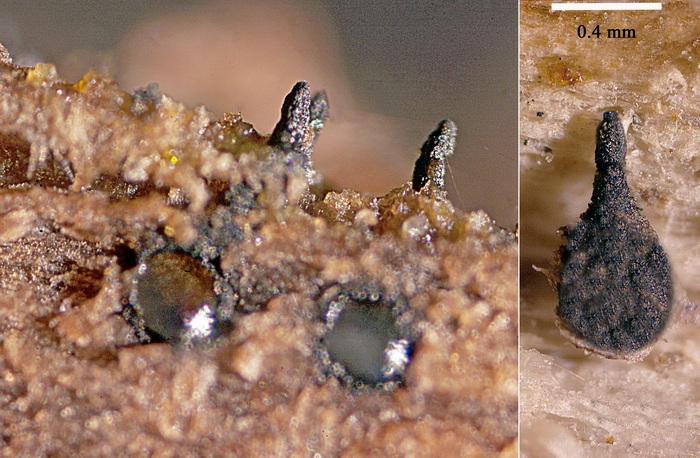
I'd like to know your opinion about this 'ceratostomelloid' fungus growing on rotten wood of Fagus sylvatica. The beaked, scattered, glabrous, inmersed perithecia are up to 1 mm high with only the long necks erumpent across the surface.
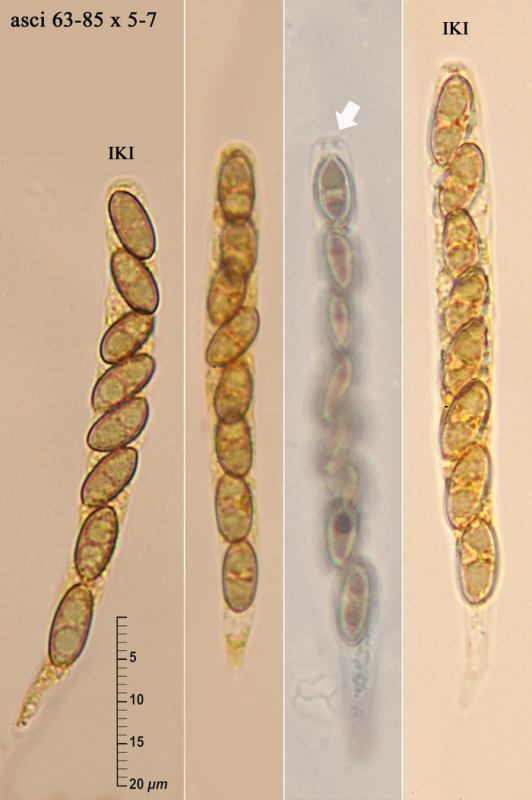
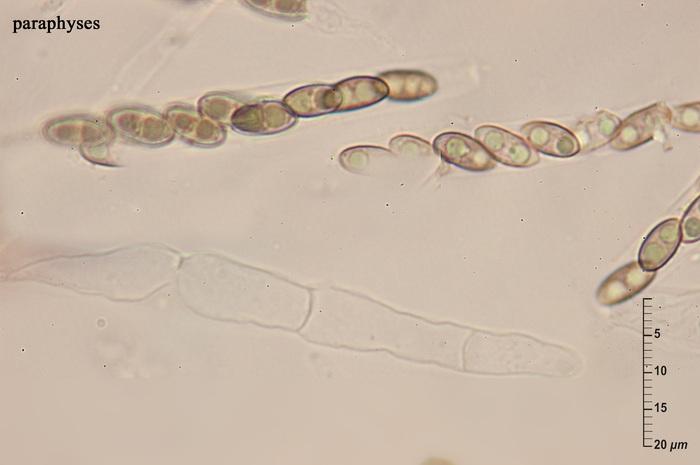
The asci are cylindrical, shortly stipitate, 63-85 x 6-7 microns, with an conspicuous apical apparatus IKI negative and 8 ascospores obliquely uniseriate. Paraphyses septate tapering at the end. Ascospores 8.5-11.5 x 4.3-4.9; Q = 1.96-2.58, allways 2-guttulate, smooth, maybe porate (?).
I think this fungus agrees better with Xylomelasma than Ceratostomella. What do you think?
Thanks again


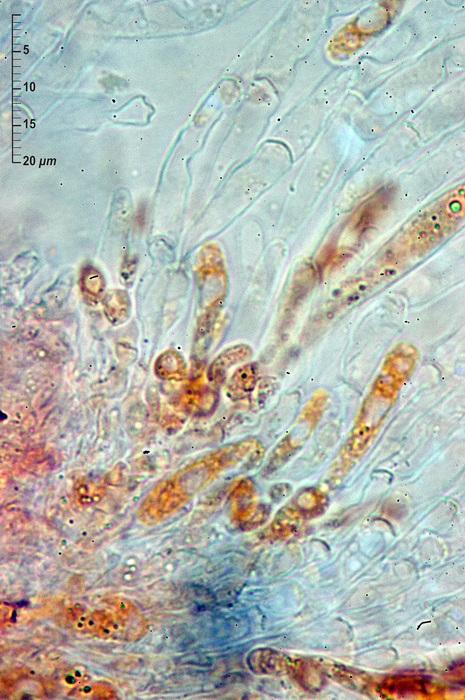
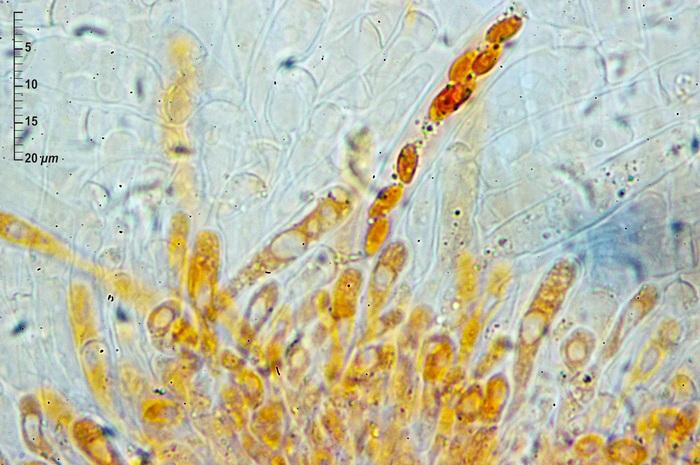
Xylomelasma sordida seems to be a good match. Did you observe the peculiar ascogenous cells at the base of the asci, as described by Réblova? You have to make a very thin slide to see them, hard job!
Saludos,
Jacques
Bonsoir Jacques
It's really hard! Because the interascal tissue is dense and very little congophilous
Thanks gain!